
Diane’s Country Music Newsletter — 18 March 2026
IN THE SPOTLIGHT – DAVE POMEROY
Dave Pomeroy is reaching the end of his third six-year term as president of the Nashville Musicians Association, AFM Local 257. He will soon tie Harold Bradley as second longest president—18 years. Decades earlier, George Cooper was president for 36 years. Dave defeated Harold in 2008 and plans to run for one more term.
The purpose of our telephone call was an interview about Pig Robbins. During our conversation, we also talked about the music industry in Nashville and the role played by Local 257.
“We’re trying to shine a light on the good stuff,” Dave says about a new initiative called Fair Trade Music Nashville. “We’ve just finished a survey of the musicians who work downtown and are ranking the clubs in terms of where they want to play, who treats them the best.” The idea is to put a “good people” sticker on the front door of clubs that treat musicians with respect.
Born and raised in Europe as the son of an American soldier, Dave moved to Nashville in 1977 at age 21. “I came here knowing one person and never having lived one place longer than eight years, and now I’ve been here 48 years,” he says. “I’m just so fortunate to get the opportunities I did. I owe a lot of it to Don Williams.” He’d been playing bass in Don’s band for five years when Don called him to fill in for his regular studio bass player. That was 1985 and the beginning of Dave’s career as session musician. They recorded Don’s final number one single, “Heartbeat in the Darkness.” Don next worked with Keith Whitley, before playing on Trisha Yearwood’s first seven albums and Alan Jackson’s first three number one records.
“I tell people all the time, the music business doesn’t have to be a win-lose equation,” Dave told me. He explained how Owen Bradley and Chet Atkins encouraged union contracts when they started running Decca and RCA. Right-to-work laws had just been passed, which guarantee an employee’s right to refrain from joining a labor union. They somehow convinced companies to put performances on union contracts. Several years ago, Mazda used Patsy Cline’s recording of “Back in Baby’s Arms” for two years on a commercial. Most of the musicians on that record are gone, but Local 257 got their beneficiaries paid. Dave says, “We had a 92-year-old violin player, who’s on the record, come in to pick up a check for $1,800.” He’d made $57 the day of the recording session.
“That’s the best feeling in the world, to get those people paid for something from a long time ago,” Dave says. “That’s intellectual property.” They occasionally have to do an affidavit for songs from the ‘60s and ‘70s because someone once threw away a batch of contracts. Dave described the most recent occurrence, which happened shortly before Jerry Kennedy’s death. Expedia produced an ad where several Asian women were discussing traveling to Nashville. It then shows them in Nashville, line dancing to Tammy Wynette’s “Your Good Girl’s Gonna Go Bad.” Dave called Jerry, who had the recording date and all the players written in his book. Dave prepared the affidavit and took it to Jerry in assisted living, and Jerry signed it. “And sure enough, Expedia is going to pay everybody,” Dave concludes his story.
At the beginning of the pandemic, a home studio owner was turned into Nashville Metro for having an illegal business. Hairdressers and the musicians’ union both got involved in that fight. Metro had always considered it illegal to have customers in homes in residential neighborhoods. “For some reason, they never thought about people giving piano lessons in a house,” Dave says. “How many hundreds of years have kids been taking piano lessons in houses?” The union had been working this issue for years and finally succeeded, early in the pandemic, to “get Metro to say you can have customers in your house, and a home studio can be a legal business if you want to get a business license,” Dave explains.
A recent ruling that has brought many new members into Local 257 concerns parking. The union made a deal with nationally based Metropolis Parking to provide one hundred percent free parking for its musicians in 24 parking lots all over Nashville.
For years, the union contract with record labels prohibited using recorded tracks onstage because it would put musicians out of work. As technology evolved, it became easy to sync recorded tracks with onstage equipment, but it wasn’t allowed. Jason Aldean, who didn’t have a rhythm guitarist or pianist in his band, wanted to use a specific track onstage and asked Dave how he could get permission to do that. Dave consulted with the Federation and researched existing special contracts. In the end, Aldean agreed to pay $170 a night to use the tracks, and the two session musicians earned thousands of dollars while sitting at home. I don’t know if this is becoming standard or if each case requires personal negotiation.
Dave and I ran out of time, and I never got the chance to ask about his military childhood. A conversation for the future, I guess.
NEWS
Breaking news: The survey by the Nashville Musicians Association that Dave Pomeroy told me about has been released. Whiskey Riff reports that over 300 musicians who work in downtown Nashville responded to the NMA survey, “Best Bars on Broadway for Musicians Competition.” Musicians considered pay, safety, overall treatment, and respect for artists when they voted:
Top 5 Best Bars For Broadway Musicians
5) Robert’s Western World
4) Old Red
3) Acme Feed & Seed
2) Legends
1) The Stage
Dave Pomeroy tells WKRN, “We are going to put what we call the Fair Trade Music sticker on the front windows of these bars to make the public aware that these are the places where musicians feel like they are treated the best. If we’ve got to do one thing in Nashville, it’s preserve the tradition of musicians being respected.”
The 2026 Country Music Hall of Fame inductees will be announced at a press conference hosted by Marty Stuart on March 20. It will be broadcast live at 10 a.m. Central on CMA’s YouTube Channel and can be watched here.
Central Pennsylvania lost one of the area’s most beloved country singers and songwriters on January 22, reports Penn Live Patriot-News, when Al Shade died at age 98. WLBR, a Lebanon-based radio station, began promoting him in 1952 as an upcoming country/western artist. Shade was best known for “I’m A Star On WLBR” and “Forever and a Day,” which he wrote with his wife and musical partner, Jean, whom he first met in 1953. Jean died in 2017 at age 86. The Al Shade Show became one of the longest-running radio shows and celebrated its 70th anniversary in 2022. In 2024, at age 96, Al was recognized as the oldest country western performer in the U.S. I spotlighted him in my newsletter in 2021: https://dianediekman.com/dianes-country-music-newsletter-1-december-2021/
A star-studded tribute to Tammy Wynette will take place at the Ryman Auditorium on March 30. MusicRow reports that the concert, “Forever Yours,” will be recorded for broadcast on PBS Great Performances. The lineup to sing Tammy’s hits includes: Wynonna Judd on “Woman to Woman,” Wynonna and Randy Houser on “We’re Gonna Hold On,” The War and Treaty on “Golden Ring,” Ann Wilson on “Stand by Your Man,” Gretchen Wilson on “Til I Get It Right,” KT Tunstall on “D-I-V-O-R-C-E,” Terri Clark on “Your Good Girl’s Gonna Go Bad,” and many more. Georgette Jones will honor her mother with “I Hope You Knew.” Details on an airdate will be announced soon.
“We lost our personal life savings,” Soundcheck owner Ben Jumper says of the 2010 Nashville flood when the Cumberland River rushed through the rehearsal space and floated tens of millions of dollars in gear down Cowan Street. The Nashville community came to the rescue, and SBA loans helped the Jumper family get back to business. “The most important thing was Vince Gill calling up and saying, ‘I want locker number one back when you’re ready,'” Jumper tells the Tennessean. “Kenny Chesney saying, ‘I want the first 30 days in room A when you’re ready.’ I could go on and on. Keith Urban reached out. Randy Travis. All those people kind of started their careers there at Soundcheck.” But once back in business, the Jumper family learned the Soundcheck lease wouldn’t be renewed because the East Bank acreage had been sold. The Tennessean reports that Soundcheck is now in business at Rock Nashville, a massive, 55-acre production campus that houses Soundcheck and 29 other tenants. Jumper’s daughter, Kindal, is senior general manager of Soundcheck at Rock Nashville, and the Jumpers are minority partners in the new business. Rock Nashville houses rehearsal studios ranging from arena-sized down to local band size. Arena and stadium-sized productions no longer have to leave town to rehearse, and big-name out-of-town performers are beginning to use the facility. Soundcheck rents sound and production equipment and instruments. Semis can back up to loading docks that connect to the 232 gear storage lockers, which were all rented the first day. Vince Gill has locker number one.
The Country Music Hall of Fame and Museum has announced a new exhibition that honors Clint Black, reports Country Now. Titled Clint Black: The Hard Way On Purpose, the upcoming exhibit opens to the public on April 22 and will remain on display through August 2027. “Black’s decades-long determination to write and perform his own songs, and to advocate for artists’ rights, marked him as a maverick and proved causes worth standing up for,” Kyle Young, chief executive officer of the Country Music Hall of Fame and Museum, stated. The displays will include stage wear, instruments, memorabilia, manuscripts, photographs, and videos to showcase Clint as singer, songwriter, actor, and label head, plus his many other roles. “I’m honored to share news that my exhibit at the Country Music Hall of Fame and Museum opens April 22nd in Nashville,” Clint posted on Instagram. “It’s hard to put into words what it means to have my journey, songs, and memories preserved in a place that celebrates the heart and history of country music. From the early days of Killin’ Time to the moments that shaped me on and off the stage, this exhibit tells the story I’ve been blessed to live.”
San Antonio Current reports the death of San Antonio music legend Augie Meyers, 85, who died in his sleep March 7, next to his wife Sara, at their home in the Texas Hill Country town of Bulverde. Born in 1940 in San Antonio, he founded the Sir Douglas Quintet with childhood friend and fellow singer/songwriter Doug Sahm in 1964, when record producer Huey P. Meaux wanted to replicate the success of the Beatles. They inspired a generation of artists that included The Mavericks. In the 1990s, Augie and Doug co-founded the Texas Tornadoes with fellow South Texas music icons Freddy Fender and Flaco Jiménez. Their hits, “Who Were You Thinkin’ Of” and “Adios Mexico,” widened the audience for San Antonio’s homegrown Tejano and conjunto sounds. In addition to his work with the Sir Douglas Quintet and the Texas Tornados, Augie released 23 solo albums and was a sought-after sideman who recorded with Bob Dylan, Tom Jones, Tom Waits, Willie Nelson, and Gene Vincent.
MusicRow reports that Vince Gill has unveiled the fifth volume in his 50 Years From Home EP series: Lonely’s What I Do. “I love the melancholy in music,” Vince says. “I always have. Maybe it goes back to the bluegrass days of the murder ballads. There’s so much more emotion in songs that have a little more despair. I think they’re as powerful as they are because they tell great stories. They paint great pictures that take you to that place — whether they’re true or not.” Vince co-wrote the songs and produced the EP in his home studio in Nashville.
LETTERS
Tracy Duffy writes, “Thank you for your wonderful newsletter. I have been receiving it for several years now and I share it with many others as well. I love stories such as Dolly putting her name on that children’s hospital and I pray they will be of great help to many. She has such a generous heart. I also love the story about Dwight wanting to get the message to his fans about why he was so late for that concert. Such stories bring home the fact that they aren’t just country music singers and favorites of ours, but they truly are people who care.”
Michael Green says, “Great newsletter as always! About Hairl Hensley: One show he did was called ‘Early Bird Gets the Bluegrass.’ For his sake, I hope it was taped and not live. He also had been a rock DJ, and as I recall–I’m certainly open to being corrected–one time Ronny Robbins said in an interview that he listened to rock music and would have it on in the house. Marty would come home, shut the radio off, and yell about rock music. The DJ was Hairl, who became a close pal of Marty’s at the Opry, and Ronny said he was pretty sure his dad never knew that Hairl was who he used to shut off.”
Ron Wood writes, “Your news of Hiram Higsby brightened my memory as I listened to him quite often when he was broadcasting from KDHL 920 AM in Faribault, Minnesota. I had an audio cassette I had recorded from there as I liked the genuine tunes he picked to play. Your heading ‘In Their Own Words’ especially caught my eye as I’m reading a book titled exactly In Their Own Words. It contains translated-to-English letters written by immigrants from Norway to the United States in the era of 1870-1900. In general, they always looked forward to letters from family and friends in Norway. This is also important to me as my heritage is Norwegian. My grandparents came from Norway with three children. Mom was their second child born in the U.S.”
Frank Gerard says, “Loved reading about Charlie McCoy in your newsletter.”
Richard Sokolosky, son of “SOCKO” Sokolosky, writes, “Just read your account of your last conversation with Jerry Glen in 2020….and thus my motive to contact you. So enjoy reading your monthly posts…..with my particular interests in any/all C&W artists that got their start on The Louisiana Hayride. My Dad is “SOCKO” Sokolosky. Dad was a member of The Louisiana Hayride house band in the 1950s and backed up all the artists that went thru The Hayride. I grew up backstage on that Saturday night show. I and my older sister, Jane Ann, grew up with Jerry Glen and Linda Brannon, Jerry’s first wife. Linda and Jane Ann graduated high school together. I last talked to Jerry Glen in 2005 and upon his passing spoke with several Hayride contacts in Shreveport. Our phone conversation in 2005 was about a photograph I have in my Louisiana Hayride archives that I sent Jerry Glen a copy of. After reading your 2020 conversation, I wanted to see if you might like a copy of this photograph. I still have Dad’s accordion. The emotional truth for me about this photo is that all the kids of these men and other house band members over the years not shown—including the kids of Tillman Franks, Don Davis, Sonny Trammel, Buddy Attaway, and others—all of us have our dad’s instruments they played on the Hayride, and we have no place to leave them. Sadly, there is no Louisiana Hayride Museum in Shreveport like there is in Nashville for the Opry. All these instruments are a part of Country Music history, albeit a small part, and should have a place to be properly displayed. Maybe before I leave this life, one will be built.”
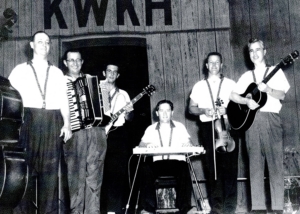
Louisiana Hayride house band 1957-59: Coach Floyd, Socko Sokolosky, Jerry Glen Kennedy, Felton Pruett, Dobber Johnson, and Sonny Harville
Donald Ewert wonders, “I recently discovered a great singer by name of Norman Wade. I really enjoy his real Country music. I read somewhere that he worked with or for Marty Robbins. Is this true?
Diane: Yes, he came to Nashville as a teenager, and Marty hired him as a worker after meeting him at the Opry. I did a phone interview with him in 2007 for Marty’s biography. Norman died November 18, 2021. His friend wrote me, “He did so much enjoy hearing what you were writing and cherished being included in your book about Marty Robbins. Thank you so much for giving that to him- he was so proud of what you wrote.”
Kate and Marty Davis write from Oregon, “Thank you for an extra special newsletter this month. So much going on! Loved the article on Charlie McCoy and I hadn’t heard about Dolly and the Children’s Hospital. Thanks for keeping us west coast folks up to date.”
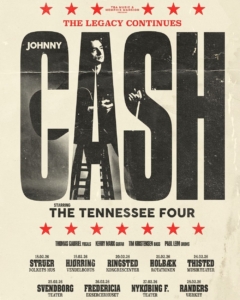
Paul Leim says, “Our TENNESSEE FOUR tour of Denmark was a huge success. Seven of nine shows completely sold out and two at 85%.”
Doug Lippert writes from Carmel, Indiana, “Another great newsletter. Man o’ man, are you right about Charlie McCoy! If anyone needed a photo to accompany the word ‘musician’ in the dictionary, it would be Charlie. We always celebrate the stars, but without people like Charlie the hits would have a hard time being hits. His versatility is pretty much unmatched and who among us can say our work has been in steady demand for 65 years? PS: Yesterday I stumbled across a two-part interview Walker Montgomery did with his dad and uncle, taped at a cool little bar in Versailles, Kentucky. It’s just a little nugget whereby JM and Eddie talk about their early days and how each of them got their breaks. Both stated it was the first time they had been interviewed together. JMM said their paths didn’t cross once they both took off. JMM was the more talkative of the two. I think the video was about three years old so before JMM retired from the road. It made me want to go see Eddie again.”
Diane Jordan in Nashville reports: “I’m saddened to hear of the death of my journalist friend, Stacy Harris, on January 31. I last saw her in October. She didn’t appear to be well and only mentioned that she was dealing with health issues. When I couldn’t contact her either by phone or email to wish her a happy birthday on Feb 5, I did some searching. I learned she had battled pancreatic cancer for two years and died in Hospice on January 31. Stacy was born in 1952 (I believe) and raised in Minneapolis, moving to Nashville around 1970. Her accomplishments, far too many to mention, include publishing several books. She has written for many magazines and formally served as publicist for several country music artists. She pioneered Country Music on the Internet with her online column, Stacy’s Music Row Report. Her last entry was in December of 2025. I miss you, Stacy. Rest in peace, Old Friend.”
Diane: I’m so sorry to hear of her death. I emailed her several days ago because I hadn’t heard from her in a while. She’s subscribed to my newsletter since its beginning, and she often contributed her comments.
COUNTRY MUSIC DISC JOCKEY HALL OF FAME – 1996
Dugg Collins, born Fred H. Collins in 1943 in Memphis, Texas, began his radio career at KTCX Childress in 1959 at age 16. After working at several other radio stations, he moved to KBUY and KDJW in Amarillo in 1968. There he started recording song demos, one of which caught the attention of Little Darlin’ Records in Nashville in 1969. Johnny Paycheck signed him to the label, produced his first recording session, and gave him the name Dugg. The band Dugg Collins and the West Texas Express performed for 34 years. In 1999, Dugg joined KFDI Wichita, Kansas. He was inducted into the Texas Country Music Hall of Fame the same year. He moved back to Amarillo in 2008 and died there in 2011 at age 67.
Honest John Trotter, born in 1928 in Fort Smith, Arkansas, joined his sister’s radio show in 1946. By 1950, he was doing three shows a day for three local radio stations: KFPW, KWHN, and KFSA. He moved to Tulsa and then to Hollywood, California, where he became KABC’s program director in 1955. Three years later, he gained fame by initiating the first helicopter traffic reports. He was also the “voice” on Walt Disney Presents for two years. After moving to station KILT in Houston, he threw his hat in the ring to be mayor. He lost the election, but the race was close enough to require a recount. He earned the nickname “Honest John,” which stayed with him for the rest of his career. In 1965, he signed with Chicago’s country radio station WJJD. In 1966, he received a letter from President Johnson that commented on a record he’d made called “The Square.” Honest John retired to Abilene, Texas in 1974. He died there almost two years later at 47 years old.