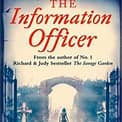
The Information Officer
By Mark Mills
By the spring of 1942, the tiny island of Malta, located south of Sicily in the Mediterranean Sea, is the most bombed patch of ground in the world. Pounded incessantly by German and Italian warplanes, the Maltese are losing confidence in the power of Great Britain to protect its colony. Loyalists who wish to remain British subjects and nationalists who long for independence both struggle for survival as they wonder which news reports to believe.
This historic background provides the setting for The Information Officer, in which a British information office on the island is responsible for publishing facts to offset biases and war propaganda of the local newspapers. Major Max Chadwick is the Information Officer and hero of the novel. As the Germans advance and Great Britain loses its grip on the island, Max works diligently to soothe disgruntled and fearful residents. Upon learning a Malta-based British submarine has been destroyed, he withholds the news for several days as he figures out “how to play it, how to soften the blow for his readers and listeners.” When a senior staff officer complains that moving the submarine fleet to Egypt “feels like a retreat,” Max tells him, “It isn’t. And my job’s to make people understand that.”
His task is made more difficult by the discovery of a murdered woman’s body. Clasped in her hand is a uniform tab from an officer of the British submarine Upstanding. Max learns of this from his friend, Lieutenant Colonel Freddie Lambert, a British medical officer at the local hospital. Max and Freddie try to find the killer without alerting authorities or stirring up anti-British sentiment.
Max also doesn’t want to alert his lover, Mitzi Campion, who is married to the Upstanding’s commanding officer, Lieutenant Commander Lionel Campion. Two other friends, RAF Spitfire pilot Ralph Tindle and a mysterious American military liaison officer named Elliott, add to the number of possible suspects. Max develops a tenuous relationship with Lilian Flint, deputy editor of the island’s only Maltese-language newspaper. She advises Max on presenting his messages to enhance the morale of the locals, and he gives her war information not otherwise obtainable. When more bodies are discovered, Max turns to Lilian for assistance. And then she disappears.
The Information Officer is the third novel of London-based screenwriter Mark Mills, who won a Crime Writers’ Association Award for Amagansett in 2004. He expertly sets his fiction stories into historical backgrounds, and he develops his main characters well. The storyline of The Information Officer meshes with the historic backdrop, as time runs out for both the bomb-devastated island and the next young woman to be killed.
Although the dialogue itself is well-written, the strings of untagged conversation are hard to follow; I found myself mentally adding names to each line in an attempt to identify the speakers. Here’s an example:
Elliott flipped the fish on the grille.
“Why Malta?” Max asked.
“Because we’re making history here.”
“Not that they don’t have enough of it already.”
“This will be right up there with the best of it. The war can turn on what happens here.”
“You’ve been speaking to Hugh.”
“Hugh’s a romantic.” [Twelve more lines follow, before we finally get a dialogue tag.]
In this novel, alternate points of view are sporadically used when the story can’t be told through Max’s eyes. One consistent technique is the insertion of short chapters to place the reader inside the serial killer’s mind. We learn he was responsible for the death of his abusive father and feels no emotion toward other human beings. His identity stays well hidden.
Unfortunately, the resolution of the story does, too. The reader is left confused and hanging. A study of the epilogue is necessary to figure out what happened. The book itself is packaged between two halves of a scene from nine years later, in 1951. The prelude adds clutter rather than intrigue, and the epilogue is inconsistent with the personalities of the characters.
In spite of its shortcomings, The Information Officer held my attention and I recommend it for anyone who enjoys historical fiction and perhaps wants to learn a bit more about World War II history.